
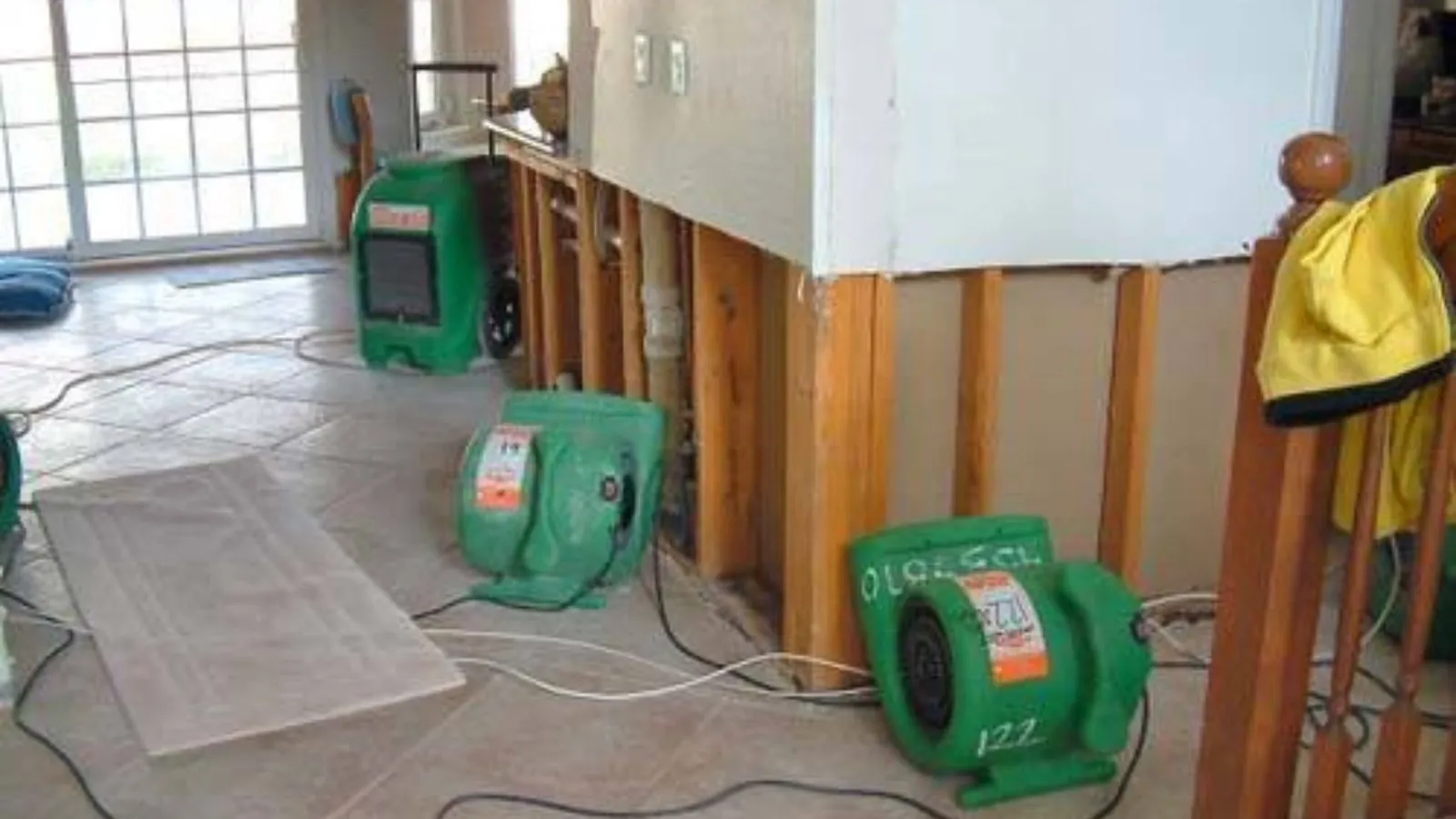
Water damage in a rental raises questions that owner-occupied homes do not. Who stops the leak, who calls a restoration company, and who pays? The answers depend on your lease, your landlord and local rules, and we are not lawyers. What we can describe is the practical sequence that protects both sides.
The steps below apply to apartments, duplexes and single-family rentals. They focus on safety, documentation and communication, since those are the things that make a dispute easier to resolve.
Water is spreading right now? Call (833) 521-1033. The line is open 24/7.
For tenants: safety and notice come first
If water is spreading, close the shut-off valve if you can reach it. If you cannot find it, call the landlord or property manager right away. Stay out of rooms with wet electrical outlets and call the utility or 911 for any electrical or gas concern.
Notify the landlord in writing as soon as you can. A text or email creates a record with a date. Say where the water is, what you see and what you have done so far.
Document before anything moves
Photograph and video every wet area, damaged item and the source if it is visible. Include wide shots and close-ups. Note the date and time. If belongings are damaged, list them with approximate values.
Keep receipts for emergency costs such as a hotel or cleaning supplies. If you have renters insurance, call your insurer early and ask what it covers. Policies differ, so get answers in writing.
For landlords: respond and secure the property
Respond quickly and keep records of every contact. Stop the water at the source, make the space safe and arrange drying. Standing water and wet materials get worse with time, so delays can raise the repair scope.
Notify your insurer and keep photos, invoices and moisture readings. Our water extraction and structural drying pages describe what a crew documents.
Who pays depends on the facts
Responsibility often depends on the cause. A failed supply line is different from a tenant leaving a tub running. Leases and local rules vary, so ask a tenant organization, a legal aid office or an attorney about your rights and duties.
We do not decide who is at fault or who pays. We explain scope and price before work starts, and the party who authorizes the work is the one we deal with.
Multi-unit buildings add steps
In an apartment building, a leak can start in one unit and damage others. Tell the property manager about every unit that shows water. A shared wall or ceiling stain below a bathroom is a common sign of a leak above.
Moisture readings show how far water has traveled. If you are in a building with several units, ask that readings be taken in each affected unit.
Mold and health questions
Water that stays for more than a day or two can lead to mold. Report any musty smell or visible growth to the landlord in writing. We do not make health claims. If you have a health concern, talk to your doctor.
See our mold remediation page for how crews handle growth. Ask whether your state licenses mold work before hiring.
Moving out and deposits
If the unit is not livable, ask the landlord in writing about alternatives. Keep your documentation if there is a dispute about a deposit or rent. Do not make repairs inside the unit without the landlord's agreement unless the lease or local rules allow it.
Get written agreement on what will be repaired and who will do it. Keep copies of everything.
A short checklist for tenants
- Stop the water if you safely can..
- Notify the landlord in writing, with date and time..
- Photograph and video all damage before moving things..
- List damaged belongings with approximate values..
- Call your renters insurer, if you have one..
- Keep receipts for emergency costs..
- Follow up in writing if there is no response..
A short checklist for landlords
- Respond promptly and keep a record of every contact..
- Stop the source and make the unit safe..
- Arrange water removal and drying quickly..
- Notify your insurer and keep photos and readings..
- Tell other tenants if their units may be affected..
- Put repair agreements in writing..
Why speed matters for both sides
Wet materials get worse over time. Drywall softens, floors swell and mold can start after a day or two. Quick action keeps repair scope smaller, which helps tenant and landlord alike.
Delay also makes disputes harder. If water sat for days because no one acted, it becomes harder to say who is responsible for what.
Communication that keeps things calm
Water damage is stressful, and rentals add a second party to the conversation. Keep messages short and factual. State what you saw, when you saw it and what you need.
Avoid assigning blame in the first message. Facts and photos do more for you than accusations, and they leave room to work together on repairs. If the conversation stalls, a tenant organization or legal aid office can explain your options.
Keep a simple log of dates, calls and messages. If a dispute arises later, the log answers most questions about who knew what and when.
Renting in the Trussville area
Trussville is in Jefferson and St. Clair counties and has grown from about 3,500 residents in 1980 to 26,123 in 2020. Nearby towns such as Moody and Odenville are in St. Clair County. Landlord and tenant matters can involve local offices, so ask the city or county where you live which office handles questions.
The Cahaba Project area includes 44 duplexes among its original 287 units, so duplex-style rentals have a long history here. Duplexes share walls, which makes prompt notice to both parties important.
What to do right now as a tenant
- Tell the landlord or property manager in writing and keep a copy..
- Photograph the damage and your belongings before moving anything..
- Shut off the fixture valve if it is safe and the source is yours to reach..
- Check what your renter's policy covers for belongings..
Where to go next
Landlords and tenants in Moody and Pinson can reach the same 24/7 line. For a leak under a sink, see kitchen water damage restoration.
Whoever pays, the drying work follows the same published standard, ANSI/IICRC S500, so a tenant and a landlord can compare scopes on equal terms.
Questions readers ask
Who do I call first about a leak in a rental near Trussville?
Call your landlord or property manager. If the water is an emergency and you cannot reach them, shut off the water if you can and then call us for drying.
Can a tenant hire a restoration company?
It depends on the lease and the landlord. Ask in writing before hiring, unless the situation is an emergency and the lease allows it.
Does renters insurance cover water damage?
It often covers belongings, but policies differ. Ask your insurer what is and is not covered.