
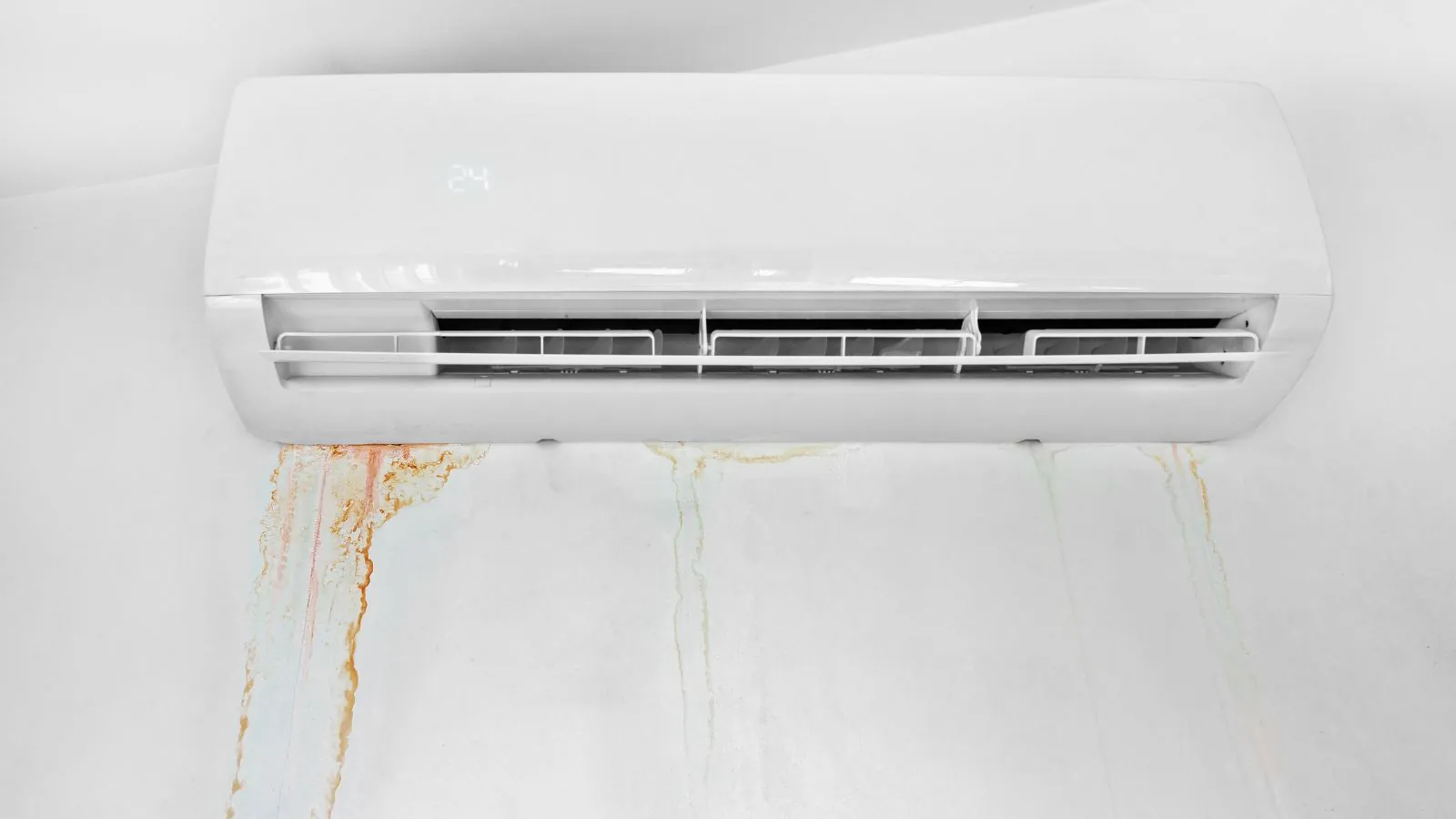
An air conditioner makes water every hour it runs, and a drain line carries it away. When that line clogs or the drain pan rusts through, the water goes into the closet, ceiling or floor near the air handler. AC leak water damage repair in Trussville, AL covers drying and rebuilding after that spill. The phone line is open 24/7, though many AC leaks are slow and show up as a stain first.
If you see water near the unit, turn off the system at the thermostat and the breaker so it stops making more condensate. Do not touch wet wiring. Then call us once the unit is off.
Water is spreading right now? Call (833) 521-1033. The line is open 24/7.
Where AC water ends up
Air handlers sit in closets, attics, garages, basements or crawl spaces. Water that leaks from a unit in an attic stains the ceiling below. Water from a closet unit soaks carpet and the wall bottom. Callers describe a condensate line that backed up, a closet next to the air handler that is wet and hardwood that began to cup after a long, slow drip.
The slow pace is the trouble. A pan that drips a cup a day can wet drywall and framing for weeks before anyone sees a mark.
Common causes of AC leaks
- Clogged condensate drain line from algae and debris.
- Rusted or cracked drain pan under the air handler.
- Frozen evaporator coil that melts and overflows.
- Disconnected or sagging drain hose.
- Cracked float switch or missing overflow safety.
An HVAC technician fixes the cause. We handle the damage that came out of the unit. This separation matters, because a repaired line still leaves wet drywall and insulation behind.
Drying the area around the air handler
The crew uses moisture meters and thermal imaging to find water in the closet floor, wall base and ceiling. Air movers and dehumidifiers dry what can be saved. Saturated insulation and soft drywall are removed. Because the water is condensate, it is usually clean but may carry debris and microbial growth from the drain line.
If the leak ran for weeks, check for mold. The mold remediation page explains when mold is tested and how it is contained. Damage under the unit that soaked a floor may call for hardwood floor water damage repair.
| Air handler location. | Damage pattern. | What is checked. |
|---|---|---|
| Hall or bedroom closet. | Carpet, wall base, adjacent room. | Closet floor, wall cavity, carpet pad. |
| Attic. | Ceiling stain below, wet insulation. | Ceiling drywall, insulation, joists. |
| Garage or utility room. | Slab, nearby walls. | Wall bottoms, stored items. |
| Crawl space. | Wet subfloor, insulation. | Joists, insulation, vapor barrier. |
Preventing a repeat
Ask your HVAC technician about a secondary drain pan, a float switch that shuts the system off and regular line flushing. Many leaks come back because the line clogs again. Replace the filter on schedule, since a dirty filter can freeze the coil.
AC leaks in our service area
Trussville summers keep air conditioners running for many months, and we take calls from Trussville, Clay, Leeds, Pinson, Moody and Odenville. If your unit is in an attic, a stain may appear in a bedroom ceiling. The ceiling water damage repair page explains how that is handled.
What to ask your HVAC technician
Ask whether the drain line was clogged, whether the pan was rusted and whether a float switch or secondary pan is in place. Ask how often the line should be flushed. Keep the written report, since it helps with insurance and shows what failed.
A technician's note that the unit was running normally when the leak began can matter later. Share it with us so the drying scope reflects the real cause.
Insurance and records
Sudden failures such as a cracked pan are sometimes covered, while long-term seepage often is not. Note when you first saw the stain, photograph the area and keep the technician's report. Ask your insurer what applies, since policy language varies.
What to do before we arrive
Turn the system off first, because a running air handler keeps pushing water into the ceiling or closet.
- Switch the thermostat to off and flip the air handler breaker..
- Move stored items out of the closet or attic platform below the unit..
- Photograph the drain pan, the stain and any standing water..
- Do not pour bleach or chemicals into the condensate line..
Drying plans for wet ceilings and insulation follow the ANSI/IICRC S500 water damage standard.
What sets the cost of AC Leak Water Damage
AC leak repair cost depends on how long the water ran and what it reached.
| Cost factor. | What changes it. |
|---|---|
| Duration of leak. | Weeks of dripping affect more material than one overflow.. |
| Unit location. | Attic, closet or basement leaks spread differently.. |
| Materials wet. | Drywall, insulation, carpet and flooring.. |
| Microbial growth. | Slime in a drain pan or mold on wet drywall adds steps.. |
| Drying and rebuild. | Equipment days and finish work.. |
Call (833) 521-1033 for your own scope. Price is explained before work starts.
Questions about AC Leak Water Damage
Should I turn off my AC if it is leaking?
Yes. Switch it off at the thermostat and, if safe, at the breaker so it stops producing condensate. Then call an HVAC technician and us.
Can an AC leak cause mold?
Wet materials left in place can support mold. If the leak ran for weeks, ask for a moisture and mold check.
Do you fix the air conditioner?
No. An HVAC technician repairs the unit. We handle the water damage.
Can an AC drain line clog cause water damage?
Yes. When the condensate line clogs, water backs up into the drain pan and can spill into a ceiling, closet or floor. An HVAC technician clears the line, and we dry what got wet.
Is AC water clean?
Usually it is condensate, but it can carry debris. Wet materials are inspected before deciding whether to dry or remove them.