
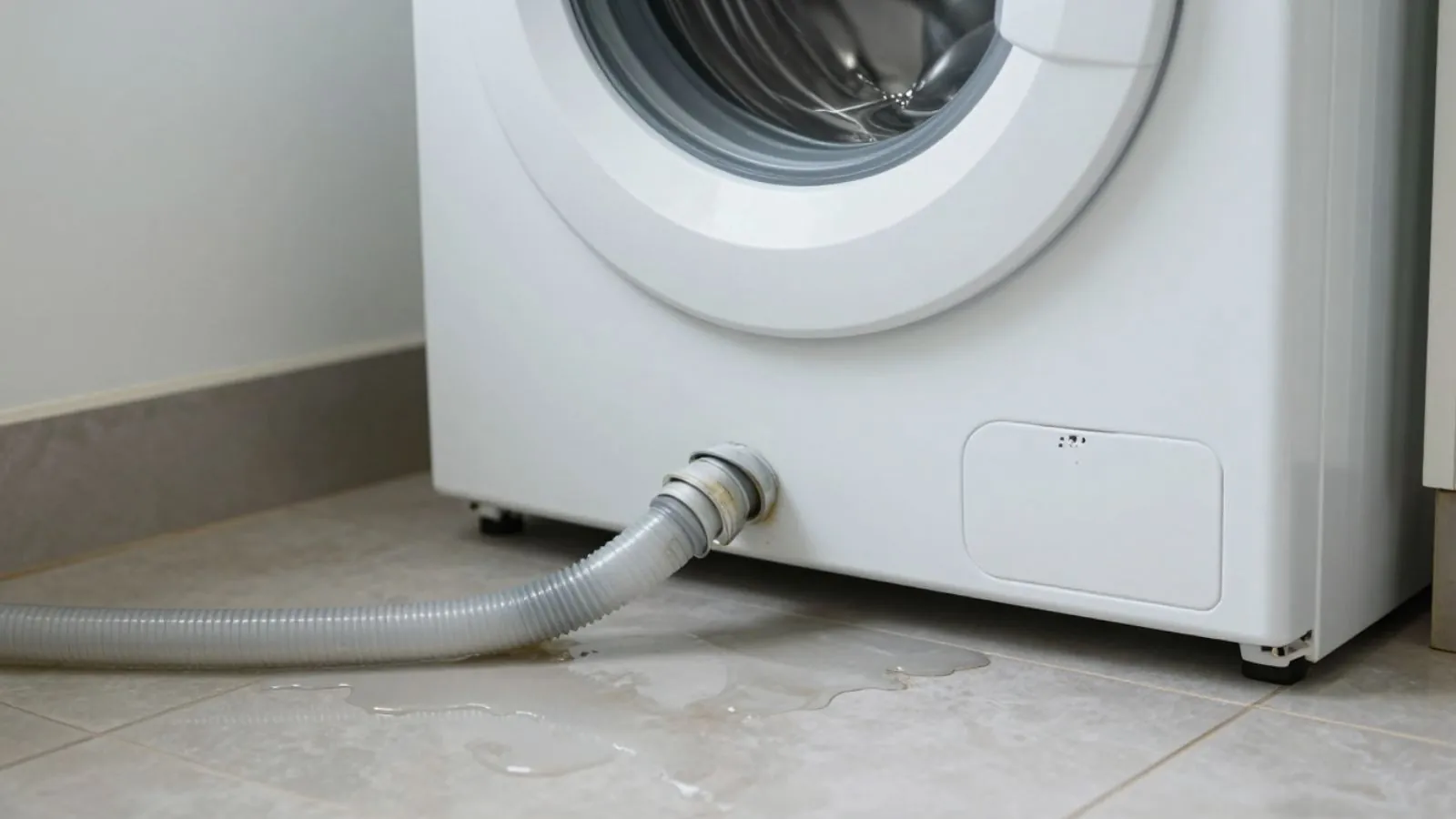
An appliance leak is often found late, because the water runs behind or under the machine. Emergency appliance leak water damage cleanup in Trussville, AL covers extraction, drying and repair after a washer, dishwasher, refrigerator or ice maker line lets go. The phone line is open 24/7, because these leaks do not wait for business hours.
Turn off the water to the appliance at its shut-off valve, unplug the unit only if the floor is dry, and keep clear of any standing water around the outlet. Call the 24/7 line once the source is stopped.
Water is spreading right now? Call (833) 521-1033. The line is open 24/7.
When an appliance leak is an emergency
A washer supply valve that fails can pour water until someone notices. A dishwasher hose that splits sends water into the cabinet base and the flooring. A refrigerator line can drip behind the unit for weeks. Callers describe water under a dishwasher, a washer valve that broke while no one was home and a floor that is soft near the fridge.
If water has soaked in, even slowly, the subfloor and cabinet base may stay wet long after the surface dries. That is the hidden part of an appliance leak.
Sources, by appliance
- Washing machine: supply hoses, valves and drain connections.
- Dishwasher: door seal, inlet valve, drain hose and supply fitting.
- Refrigerator and ice maker: small supply line and drip tray.
- Toilet supply and tank, when the fixture is the failing part.
- Sink and disposal connections under a cabinet.
How cleanup proceeds
We extract standing water, pull the appliance if needed and open the cabinet base or baseboard to read moisture. Thermal imaging shows what is wet under finished surfaces. Dry what can be dried, remove what cannot and monitor until readings reach dry standard.
If the leak was in a kitchen, cabinets and flooring are checked as described on the kitchen water damage page. Laundry room leaks often affect the walls on the other side, so the wall and drywall steps may apply.
| Appliance. | Where water hides. | What we check. |
|---|---|---|
| Washer. | Under the machine, behind the wall. | Floor, wall bottom, subfloor under the pad. |
| Dishwasher. | Cabinet base, adjacent cabinets. | Cabinet floor, flooring edges, toe kick. |
| Refrigerator. | Behind and under the unit. | Flooring seams, subfloor, baseboard. |
| Toilet. | Floor around the base, ceiling below. | Subfloor, ceiling below, wax ring area. |
What the crew checks before the job closes
Before drying equipment comes out, the crew confirms the readings on the floor, the cabinet base or wall, and the subfloor beneath finished flooring. A surface can feel dry while the layer under it is still wet. Meters and thermal imaging check each layer, and the results are logged so you can see the numbers fall.
If a drain line or supply hose was the cause, the crew will tell you what failed so your plumber or technician can replace it. That prevents a second loss from the same fitting, which is the most common reason for a repeat call after an appliance leak.
Slow leaks versus sudden ones
A sudden break is obvious, so it is usually found fast. A slow leak shows up as a musty smell, warped flooring or a soft spot. Slow leaks matter because wet materials can support mold, which is covered on the mold remediation page.
Insurers often treat sudden breaks differently from long-term seepage, so note when you first saw the problem and what you did. Photograph the supply line or hose before it is thrown away.
Prevention after cleanup
Replace rubber washer hoses with braided ones and check them each year. Turn off the washer supply when you leave town. Add a drain pan under the dishwasher or water heater where possible. A plumber can install auto-shutoff valves.
Appliance leaks across our service area
We take calls from Trussville, Clay, Leeds, Pinson, Moody and Odenville. A condo or townhome leak may involve a neighbor's unit, so notify your association or landlord. The Moody page lists nearby coverage in St. Clair County.
What to do before we arrive
Cut the supply to the appliance before anything else.
- Close the shutoff valve behind or beside the machine, or the main if you cannot reach it..
- Unplug the appliance only if the cord and outlet are dry and you are not standing in water..
- Lift rugs and loose items off the wet floor..
- Keep the hose, valve or tray that failed so the claim has a cause on record..
Water from a supply line is usually Category 1 under ANSI/IICRC S500. A drain line or overflow can be Category 2, which changes what is removed.
What sets the cost of appliance leak water damage
Appliance leak cleanup depends on how long water leaked and what it reached.
| Cost factor. | What changes it. |
|---|---|
| Duration of leak. | Hours differ from weeks.. |
| Appliance location. | Kitchen, laundry or an upstairs room.. |
| Flooring type. | Tile, laminate, hardwood and carpet react differently.. |
| Cabinet and wall involvement. | Water may reach cabinets or a shared wall.. |
| Drying days. | Equipment time depends on saturation.. |
Call (833) 521-1033 for your own scope. Price is explained before work starts.
Questions about appliance leak water damage
Do you handle appliance leak emergencies at night or on weekends in Trussville?
Yes. The line is open 24/7, including nights and weekends.
Do you repair the appliance?
No. An appliance technician or plumber does that. We handle water damage.
Why is my floor still wet after I dried the surface?
Water can stay in the subfloor, cabinet base and under flooring. Moisture meters check beneath the surface.
Can an appliance leak cause mold?
Wet materials left in place can support mold. Drying starts quickly to reduce that risk.
Is an appliance leak covered by insurance?
Sudden failures are often covered. Slow leaks often are not. Ask your insurer.