
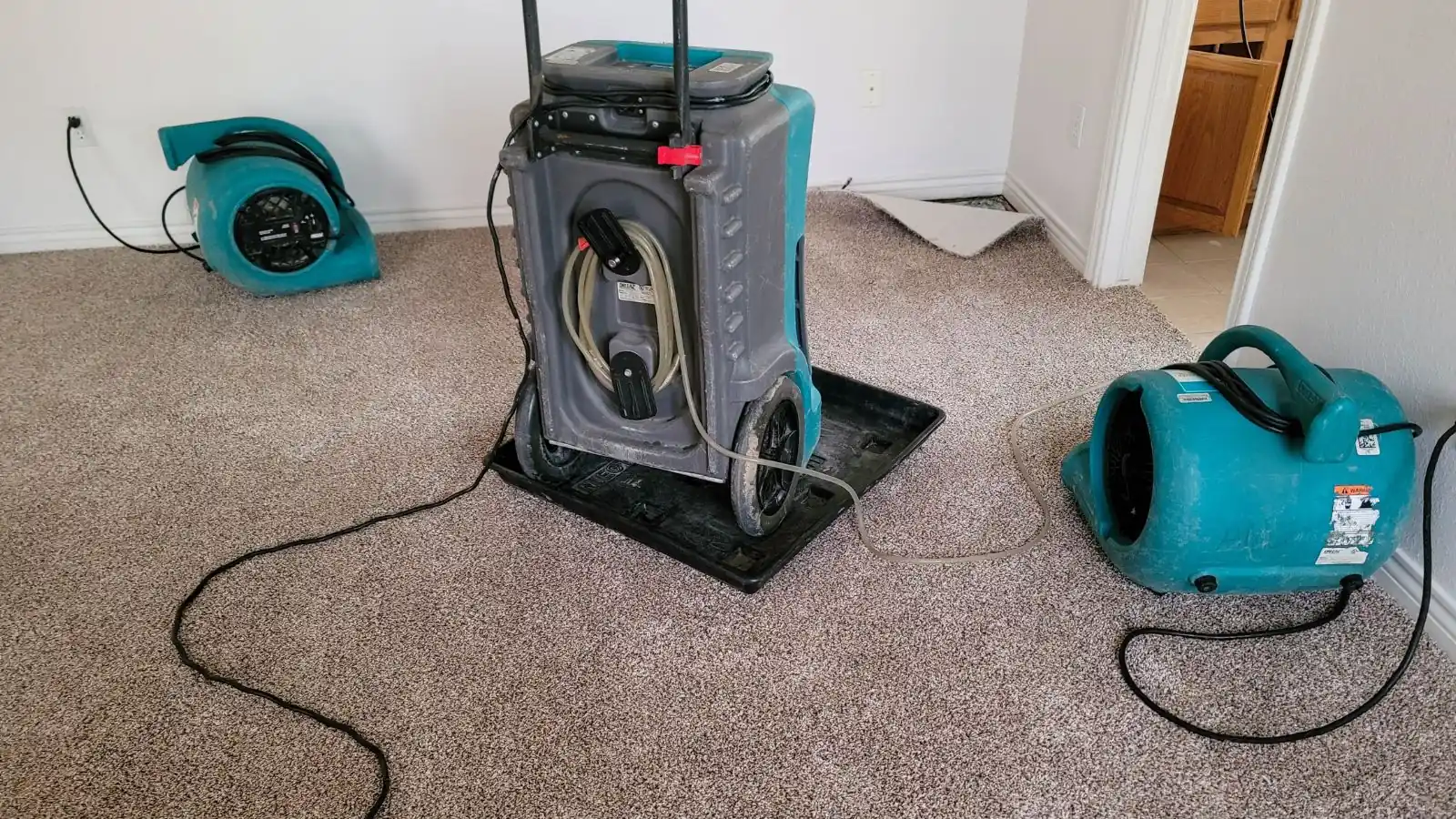
Structural drying is the part of water damage work that takes days, not hours. Structural drying and dehumidification in Trussville, AL uses moisture mapping, air movers and LGR dehumidifiers to take water out of framing, drywall and subfloors until readings match dry reference points. The phone line is open 24/7 to start a job, though the drying itself is a scheduled process.
If a wall or floor is wet and the water source is stopped, the sooner equipment is running the better. A house fan and open windows rarely reach water inside a wall.
Water is spreading right now? Call (833) 521-1033. The line is open 24/7.
My wall feels damp and smells musty: what drying does
Homeowners rarely search for structural drying by name. They search for a damp wall, a floor that will not dry, a musty smell after a leak or a room that stays humid. The fix for all of those is the same: find the moisture, remove it with controlled airflow and dehumidification and confirm with measurements.
Water mitigation is the broader term for the first steps, including stopping the source, removing standing water and starting drying. This page covers the drying side in detail.
Moisture mapping
Moisture mapping is a systematic reading of walls, floors and ceilings with meters and thermal imaging. The crew marks wet areas, records numbers and sets a target based on a dry reference reading from an unaffected part of the house. Daily visits compare new readings with the old ones so you can see the drop.
Mapping stops guesswork. Without it, a wall can look dry on the surface while framing behind it is still wet, which is how hidden moisture ends up supporting mold.
The equipment, in plain words
- Air movers: high-velocity fans that push air across wet surfaces to evaporate moisture.
- LGR dehumidifiers: low-grain refrigerant units that pull the evaporated moisture out of the air.
- Moisture meters: pin and pinless tools that read water content in wood and drywall.
- Thermal cameras: show temperature differences that point to wet material.
- Injection systems and drying mats: reach water trapped in cavities or under floors.
The equipment is used on the job and removed when drying is complete. We do not rent equipment to homeowners.
How long does drying take?
Most jobs need several days of equipment time, and the length depends on how wet the materials were, what they are made of and how much airflow the crew can create. Hardwood and dense materials dry slowly. A small leak caught early may be done in two or three days, while a flooded level takes longer.
We do not promise a fixed number of days. Readings decide, and equipment is removed when materials reach dry standard.
| Day. | What usually happens. | What is measured. |
|---|---|---|
| Day 0. | Extraction, equipment set, baseline readings. | Initial moisture map. |
| Day 1 to 2. | Equipment runs, adjustments made. | Daily readings compared with baseline. |
| Day 3 to 5. | Monitoring continues, equipment repositioned. | Readings approach dry reference. |
| Final visit. | Equipment removed once dry standard is met. | Final readings recorded. |
Drying versus replacing materials
Some materials dry well in place, like framing and most drywall that was clean-water wet and caught early. Others are removed, such as insulation, carpet pad and anything that was contaminated. The decision follows ANSI/IICRC S500, and you can ask any company whether its crews work to it.
If extraction comes first, water extraction explains that step. For soaked floors, see carpet water damage restoration and wall and drywall water damage repair.
Drying in Trussville homes
Alabama's humid air makes drying harder when windows are open, so crews often keep the space closed and let the dehumidifiers do the work. We take calls from Trussville, Clay, Leeds, Pinson, Moody and Odenville. For insurance, daily moisture logs are useful records of what was wet and what the equipment accomplished.
What to do before we arrive
Drying equipment works best in a closed space.
- Keep windows and exterior doors shut while equipment runs..
- Leave air movers and dehumidifiers where they are placed..
- Empty or confirm drains on the equipment as instructed..
- Report new smells, stains or warm spots on wet surfaces..
Equipment placement and drying goals are set by ANSI/IICRC S500 and checked with moisture readings.
What sets the cost of structural drying
Drying cost follows equipment and time, so these factors set the scope.
| Cost factor. | What changes it. |
|---|---|
| Area and volume. | The number of rooms and the height of the space.. |
| Saturation level. | How wet the materials were when drying began.. |
| Material types. | Hardwood and dense materials dry slower than drywall.. |
| Equipment count and days. | How many air movers and dehumidifiers and for how long.. |
| Monitoring visits. | Daily readings until dry standard.. |
Call (833) 521-1033 for your scope. Price is explained before work starts.
Questions about structural drying
Why does my wall still feel damp after the leak is fixed?
Water can stay in framing and insulation. Meters and thermal imaging show what is still wet, and drying equipment moves it out.
Can I just use fans and a dehumidifier from the store?
For a small, surface-level spill, maybe. For a wet wall cavity or subfloor, professional air movers and LGR dehumidifiers dry faster and reach more.
Do you rent out air movers and dehumidifiers?
No. Equipment is used by our crews on the job.
How long does drying take?
Usually several days. Readings decide when it is done.
How do I know the structure is dry?
Final readings are compared with a dry reference, and the log shows the numbers.