
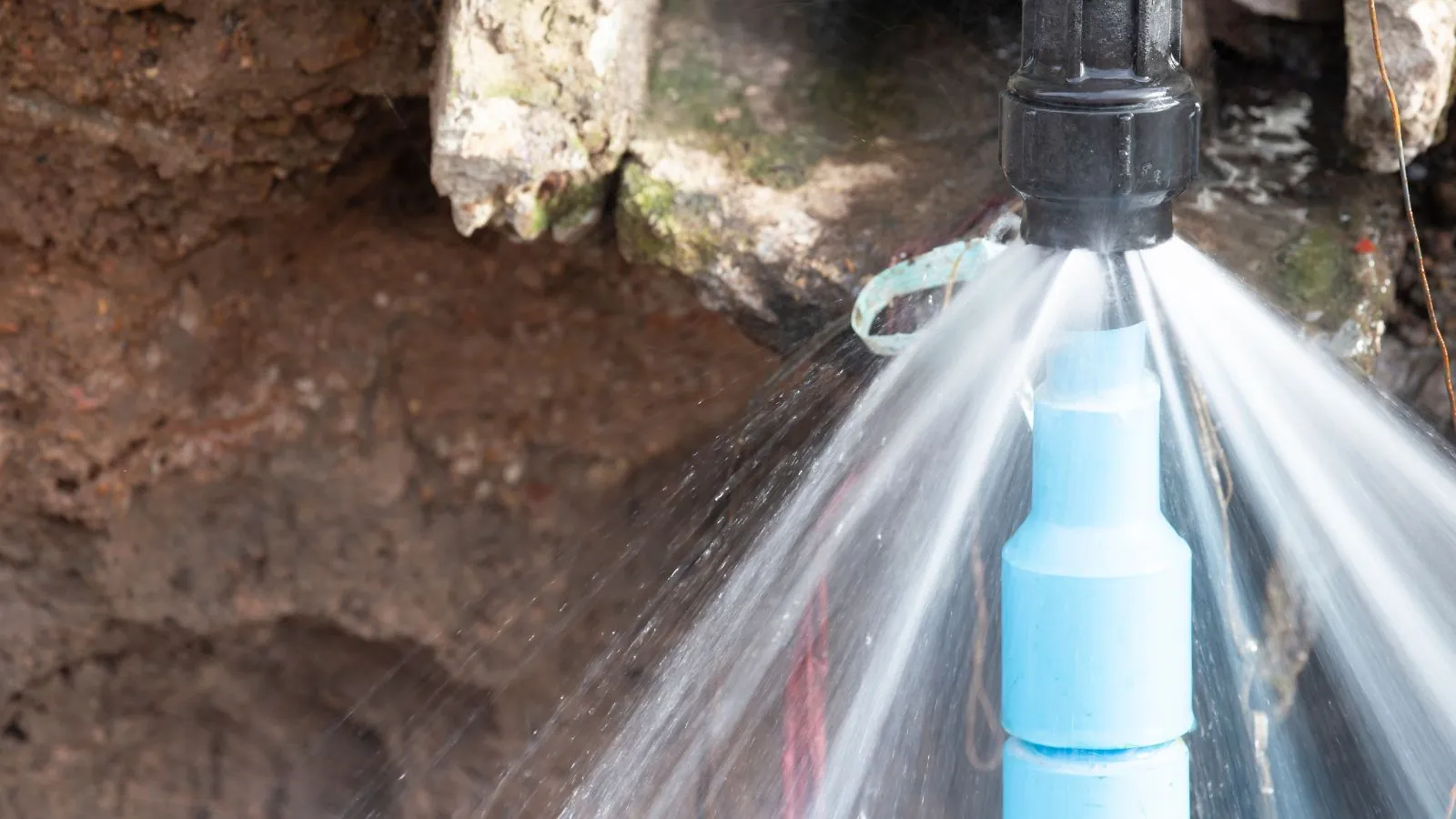
When a pipe bursts or a supply line fails, the quickest way to limit damage is to shut off the water at the main. Many people do not know where their valve is until the moment they need it. Finding it now takes five minutes and can save hours of flooding later.
This guide explains where the main valve is usually found, how to close it and what to do if it is stuck. It also covers the second shut-off at the meter.
Water is spreading right now? Call (833) 521-1033. The line is open 24/7.
Know the two shut-offs
Most homes have a valve where the water line enters the house and a second valve at the meter, usually near the street. The house valve is the first choice, since it is inside and easy to reach. The meter valve is the backup.
Look for a wheel handle or a lever handle. Both close the water to the whole house. Learn which type you have before an emergency.
Where to look inside
Check the basement, the crawl space, the garage, the utility room, near the water heater and where the line enters on the side of the house facing the street. In homes on a slab, it may be in a closet or utility area.
Label the valve with a tag once you find it. Show everyone in the home where it is.
How to close it
A wheel handle closes by turning clockwise until it stops. Turn it gently and do not force it. A lever handle is closed when it sits at a right angle to the pipe.
After closing it, open a faucet at the low point of the house to drain remaining water. Turn off the water heater if the water will be off for a while, so it does not run dry.
If the valve will not close
Old valves can seize. Do not use a wrench with force, because the stem can break and make the leak worse. Try turning gently back and forth and if it does not move, go to the meter.
The meter valve may need a special tool. Your water utility can tell you what is allowed, and may be able to shut off water at the street. Call them if you cannot close either valve.
Close individual valves for small leaks
Sinks, toilets, washers and water heaters usually have their own shut-off valves. Turn them clockwise to stop a local leak without turning off the whole house. This is the right move for a toilet supply line or a washer hose.
Test these valves once a year. A valve that has not moved in years may not close.
After the water is off
Move belongings, photograph the damage and call. If water is standing, our water extraction page explains what happens next. For a burst line, see burst pipe water damage.
Do not turn the water back on until the leak is repaired. A plumber should repair the line before water is restored.
A one-minute checklist
- Find the main valve and label it..
- Learn whether it is a wheel or a lever..
- Test it once a year, gently..
- Find and test the valves at the water heater, washer and toilets..
- Locate the meter and its valve..
- Keep the utility phone number and a plumber's number handy..
Practice before you need it
Close the valve once while nothing is wrong. Check that it moves, that the water stops and that you know how to turn it back on. Open it slowly so the pipes do not hammer.
If the valve is stiff or leaks at the stem, ask a plumber to replace it. A valve that fails during an emergency is worse than no valve.
Special cases
Some homes have a pressure reducer or a backflow device near the main valve. Do not adjust those. Homes with a well have a pump and a pressure tank, and the shut-off may be different.
If you are unsure what you have, a plumber can walk you through it. Ask them to show you each valve and label it.
Tell everyone in the home
Show family members, roommates and house sitters where the valve is. Put a note on the refrigerator if it helps. A teenager who knows how to close the valve can limit damage if you are away.
If you rent, ask the landlord where the valve is and who should be called. Keep that number in your phone.
What not to do
Do not hammer on a valve or use a pipe to extend a wrench handle. Do not turn the water back on to test if a leak is fixed unless a plumber has said it is safe. Do not stand in water near electrical outlets or cords.
If you smell gas, leave the house and call the gas utility or 911. Water and gas are separate problems, and gas is an emergency of its own.
After you restore the water
Open the valve slowly and check for leaks at joints and fixtures. Run each faucet to clear air from the lines. Check the ceiling below any bathroom and the walls near the repair for new stains.
If something looks wrong, close the valve again and call a plumber. Keep photos of the repair for your records.
Water providers around Trussville
The City of Clay lists Birmingham Water Works and Trussville Water and Gas as water providers for the area. Which one serves you depends on your address, so check your bill. The provider can tell you where its responsibility ends and yours begins, including the meter and the valve beside it.
In Trussville Springs and other newer communities, ask whether the shut-off near the street is accessible and who may operate it. Do not assume you may use the meter valve without checking.
Where to go next
See also frozen pipe water damage. We serve Pinson and Moody too.
Once the water is off, drying decisions follow the ANSI/IICRC S500 standard, which is why photographs and timing notes matter.
Questions readers ask
Who do I call if I cannot shut off my water in Trussville?
Call the water provider on your bill. Then call us if water has spread.
Is it safe to use a wrench on the meter valve?
Ask your utility first. Some require that only they operate the meter valve.
Should I turn off the electricity too?
Only if you can reach the panel safely and the floor is dry. If outlets are wet, stay out and call the utility or 911.