
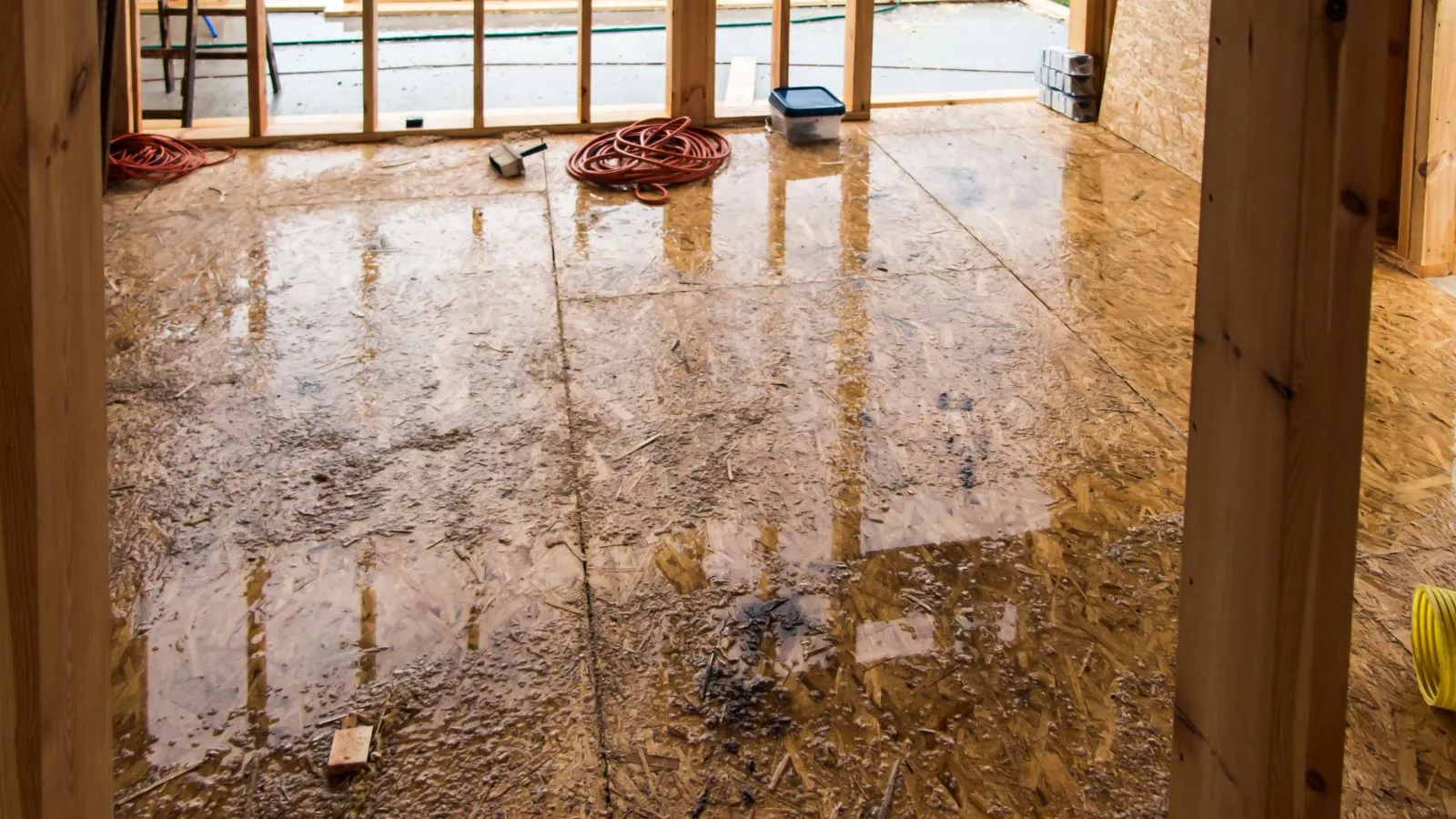
A musty smell after a leak or flood is a signal. It usually means something in the building is still damp, even if the surface looks dry. Air fresheners and candles cover the odor for a few hours but leave the cause in place.
This guide explains where the smell comes from, how to find it and what actually removes it. It also covers when the smell points to a problem that needs a professional.
Water is spreading right now? Call (833) 521-1033. The line is open 24/7.
Why water damage smells
Wet building materials and contents break down and release odors. Mold and bacteria growing on damp drywall, carpet, wood and insulation add to it. The smell is strongest when air is humid and the damp material is hidden, such as inside a wall cavity or under flooring.
A smell that gets stronger in humid weather or when the air conditioning runs often points to moisture that is still there. Treat the smell as a map and follow it.
Find where it is strongest
Walk through the area and note where the smell is strongest. Check under carpets, behind baseboards, inside cabinets under sinks, around the water heater and in closets on exterior walls. Look for stains, soft spots and peeling paint.
A moisture meter shows what the eye cannot. Crews use them to map wet areas, and you can ask for readings. Our structural drying page explains how that works.
Remove what cannot be saved
Porous materials that stayed wet for a day or two, such as carpet padding, insulation and soft drywall, often have to go. Cleaning the surface leaves the damp core behind. Removing them lets the space dry and takes the source of the odor out of the house.
Wet carpet may be dried in place if the water was clean and the response was prompt. See carpet water damage restoration for how that decision is made.
Dry the space completely
Drying is what ends the smell. Use fans to move air and a dehumidifier to pull moisture out. Open windows if outdoor air is drier than indoor air, and close them if it is more humid.
Keep going until moisture readings are normal for the material, not just until it feels dry. Many homeowners stop too early and the smell returns in a week.
Clean surfaces that can be saved
Hard surfaces can be washed with detergent and water, rinsed and dried. Wood furniture and trim may need careful cleaning and time to dry. Avoid sealing or painting until the material is dry.
Fabrics and soft items should be laundered or professionally cleaned if possible. Items that stay musty after cleaning may need to be discarded.
What does not work
Sprays, fragrances and ozone devices do not fix a moisture problem. Baking soda and charcoal can absorb some odor but do not stop the source. The EPA's mold guidance says that moisture control is the key to mold control.
If the smell returns after you dry and clean, there is probably hidden moisture or mold. That is the time to call a professional.
When to call
Call if the smell is strong, if it covers a large area, if you see mold on more than about 10 square feet or if the source is sewage or flood water. Call too if the smell appears in a room with no visible damage.
Our mold remediation page explains how professionals contain and remove growth. We do not make health claims. If you have a concern about your own health, talk to your doctor.
A quick checklist
- Follow the smell to its strongest point..
- Check under floors, behind baseboards and inside cabinets..
- Remove wet porous materials that cannot be dried..
- Run fans and a dehumidifier until readings are normal..
- Clean hard surfaces and launder soft items..
- Recheck after a week and after humid weather..
How long should the smell last?
A smell from a fresh leak should fade as materials dry, which usually takes days, not weeks. If it lingers after the surface is dry, something is still wet. Check again after a humid day.
A smell that gets worse over time is a warning. Do not wait for it to pass on its own.
Air movement and ventilation
Moving air carries moisture away from surfaces. Place fans so air crosses the damp area, and avoid pointing a fan at a wall that may hold mold, since it can spread spores. Keep interior doors open so air can circulate.
Do not close up a room that smells and leave it. Closed rooms hold humidity, and that makes the smell and the damage worse. Keep the air moving and the dehumidifier running.
Heating and cooling systems
If the smell comes from the vents when the system runs, moisture or growth may be in the ductwork, the drain pan or the coil. Do not run the system more than necessary until it has been checked. A heating and cooling technician can inspect it.
The EPA recommends that duct systems with mold growth be handled by a professional. If you suspect that, call before cleaning anything yourself.
Older and newer homes near Trussville
Trussville grew by more than 500 percent between 1980 and 2010, so many homes were built in a few waves. The Cahaba Project houses date to 1936 to 1938, and newer neighborhoods were built from the 1980s onward. Older houses may have crawl spaces and vented floors where damp air collects, and newer ones are often tightly sealed and hold humidity in.
Both can develop a musty smell after a leak. In a tighter house the smell may linger because less air leaves, so ventilation and a dehumidifier matter more.
Where to go next
If the smell started after a pipe or appliance leak, see appliance leak water damage. We also serve Clay and Leeds.
A lingering smell usually means moisture is still in a cavity. Drying to the ANSI/IICRC S500 goals comes first, and mold work, if needed, follows S520.
Questions readers ask
Why does my Trussville house smell musty after a leak even though it looks dry?
Moisture can remain inside walls, under floors and in insulation. Moisture readings find it. Follow the smell and call if you cannot locate the source.
Will a dehumidifier remove the smell?
It helps by drying the air and materials. If the source is wet insulation or drywall, those must be dried or removed.
Is the smell a sign of mold?
It can be. Look for visible growth and check moisture. If you cannot find the source, ask a professional to measure.