
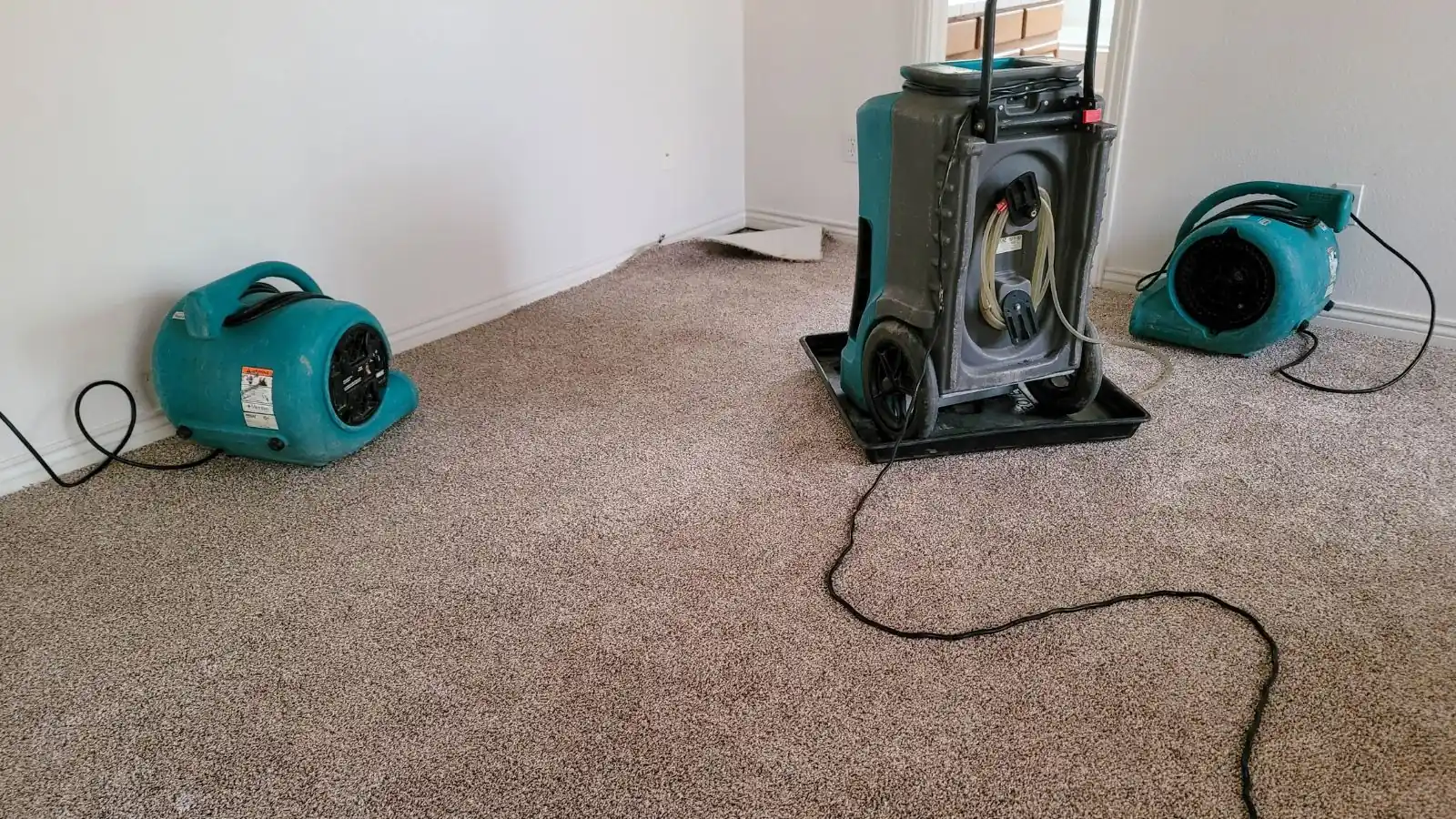
The honest answer to how long water damage takes to dry is that it depends. A small clean-water spill on a hard floor may dry in a day, while a wet wall cavity, a subfloor or a crawl space can take much longer. Anyone who gives you an exact number before looking is guessing.
This guide explains the things that set drying time and how professionals know when a structure is dry. It explains why a surface that feels dry may not be.
Water is spreading right now? Call (833) 521-1033. The line is open 24/7.
Drying is measured, not guessed
Professionals use moisture meters and record readings at the start and during drying. They compare readings with a dry reference for the same material. The structure is dry when the readings reach a normal range.
That is why you should ask for readings. They tell you whether the job is finished. See structural drying and dehumidification for how this works.
Materials change the pace
Hard, dense materials such as tile and concrete release water quickly from the surface but may hold moisture beneath. Wood, drywall and insulation absorb water and release it slowly. Thick materials take longer than thin ones.
Hardwood floors can cup if they dry unevenly. See hardwood floor water damage repair for how wood is handled.
The kind of water matters
Clean water from a supply line is the simplest case. Water from drains, appliances that carry waste or outside flooding is contaminated and often means materials are removed rather than dried. Removing them speeds the drying of what remains.
The water categories are explained on our water extraction page. Contamination is a safety matter and changes the plan.
How fast the response begins
Water that is removed quickly has less time to soak in. Standing water must be removed before drying equipment can work well. Delays let water move into walls and subfloors.
Call as soon as you find water. Stop the source, lift belongings and call the 24/7 line.
Air, humidity and equipment
Drying needs air movement and low humidity. Air movers push air across wet surfaces, and dehumidifiers pull water out of the air. High outdoor humidity can make drying slower, and a sealed building needs equipment to do the work.
A crew places equipment based on readings and adjusts as materials dry. It checks readings daily until they are normal.
Why surface dry is not dry
A floor can feel dry while the subfloor under it is wet. A wall can look fine while the cavity holds water. If you stop drying early, mold and odors can follow.
That is why professionals take readings in several places, including inside walls and under floors. Ask where readings were taken.
What can slow drying
- Thick or layered materials such as subfloors and plaster..
- Contaminated water that requires removal and rebuilding..
- High humidity or a closed building with little air exchange..
- Delayed response, which lets water spread..
- Hidden water in wall cavities, insulation or crawl spaces..
Plan for the repair afterward
Drying comes before repairs. Rebuilding wet materials before they are dry traps moisture. Ask your restoration company when readings will be normal and when repairs can begin.
Keep readings and photos for your insurer. We explain scope and price before work starts.
What you can do while drying runs
Keep doors and windows closed unless the crew says otherwise, keep equipment plugged in and do not turn it off. Check that cords are out of the way and that children and pets stay clear.
Do not move equipment yourself. Crews place it to reach wet areas, and moving it changes the airflow.
Noise, power and living in the house
Drying equipment is loud and draws power. Many homeowners stay in the house during drying, and some prefer to stay elsewhere. Ask what is practical for your home.
Tell the crew about any circuit that trips, since equipment needs power. Do not run extension cords from other units.
Questions to ask your crew
- What are the starting readings, and where were they taken?.
- What is the target reading for each material?.
- How often will readings be taken?.
- What will you do if a wall does not dry?.
- When will the equipment be removed?.
Examples of what changes the timeline
A small spill on a sealed tile floor is a different job from a leak inside an exterior wall. Carpet over padding dries differently from engineered flooring over plywood. A basement with a concrete slab behaves differently from an upper floor.
Each situation has its own path. A crew explains what it sees and how that affects the plan, rather than giving the same answer for every house.
What a daily check looks like
On most jobs, a technician returns to take readings and adjust equipment. Readings show which areas are drying and which are not. Equipment is moved or added where needed.
When materials reach their target range, equipment is removed. You should see the final readings, and they should be written down for your records.
Why patience pays off
It is tempting to end drying as soon as the house feels normal, especially when equipment is loud. Resist that. Finishing early is the most common reason problems return as odor, warped floors or mold.
A job that ends with written readings in the normal range is a finished job. Ask for them before the equipment leaves.
Drying in the Trussville area
Moody grew from 1,840 people in 1980 to 11,726 in 2010, and Trussville grew more than 500 percent over the same stretch, so much of the housing here is built tight and insulated. Tight houses hold moisture inside and rely on equipment for drying. Older houses with crawl spaces can dry differently, but a damp crawl space can hold humidity under the floors.
Local humidity and weather affect drying, so a crew reads conditions each day. We do not promise a drying time before we measure.
Where to go next
Wet carpet is covered on our carpet page. We serve Moody and Pinson too.
Drying goals come from the ANSI/IICRC S500 standard and are confirmed with moisture readings, not by how a surface feels. That is why the same room can dry faster or slower than a neighbor's.
Questions readers ask
Can I dry my Trussville home with just fans?
For small clean-water spills, sometimes. For wet walls, floors or insulation, you need dehumidifiers and moisture readings.
How do I know my house is dry?
Moisture readings reach a normal range for each material. Ask for readings at the start and end.
Can I rebuild as soon as it looks dry?
Not safely. Wait for readings, since trapped moisture causes mold and damage.