
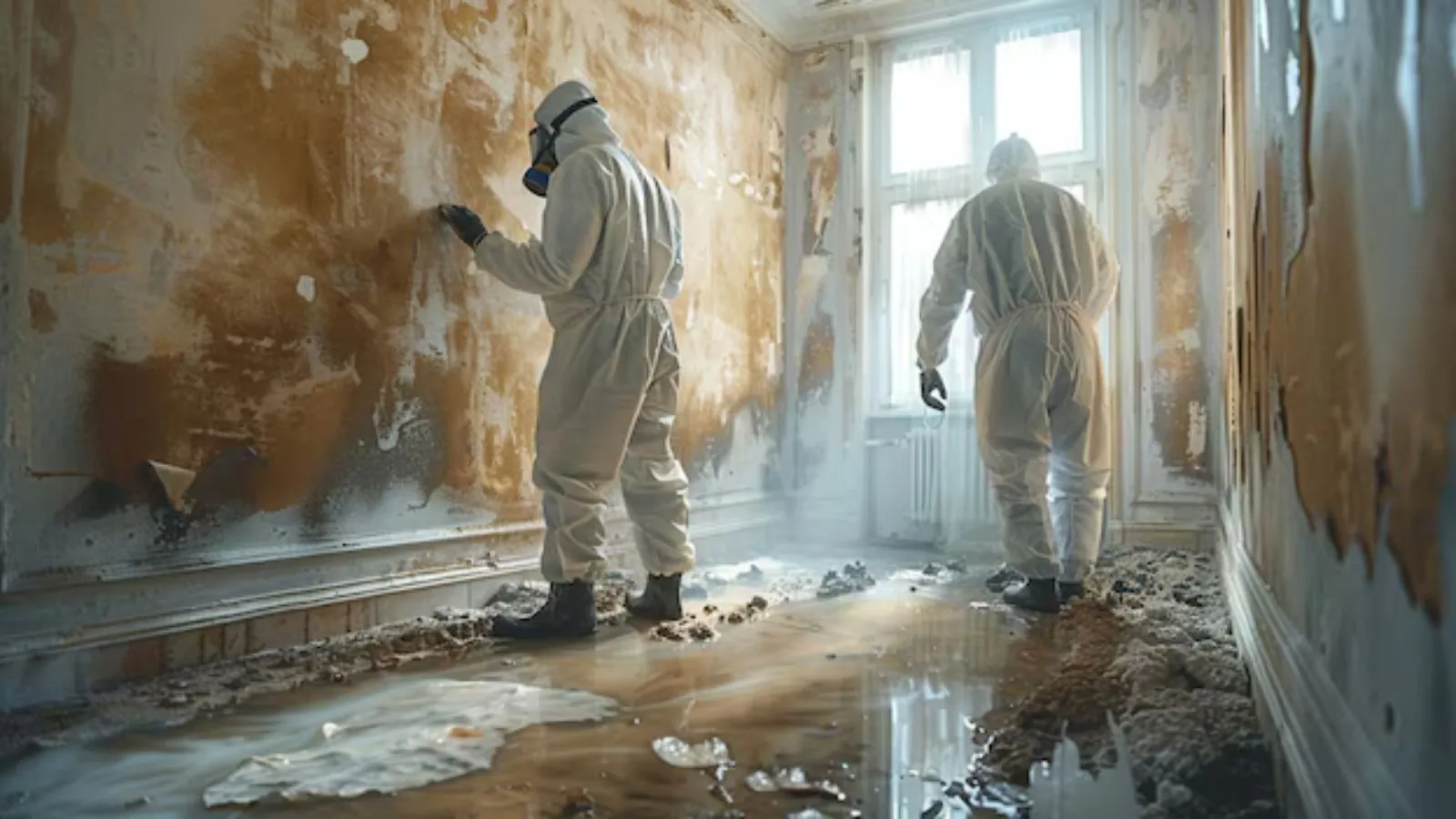
After a leak or flood, people ask how long they have before mold starts. The EPA's guidance on flooded homes says that mold can begin to grow in 24 to 48 hours on wet materials. That is not a deadline for panic, but it is a strong reason to start drying right away.
This guide explains what affects growth, what the 24 to 48 hour window means in practice and what to do inside it.
Water is spreading right now? Call (833) 521-1033. The line is open 24/7.
What the 24 to 48 hour figure means
Mold spores are present nearly everywhere, indoors and out. They need moisture and something to feed on to grow. Wet drywall, wood, carpet and paper give them that, and the EPA says growth can begin in one to two days.
Visible mold may take longer to appear, and some growth hides inside walls. A lack of visible mold after a few days does not mean the materials are safe.
What speeds up growth
Warm temperatures, high humidity, still air and organic materials all help mold. A closed, humid room with wet carpet is close to ideal. Water that is not removed and drying that does not start allow growth to continue.
Contaminated water adds nutrients. See flood damage restoration for how outside water changes the plan.
What to do in the first day
Stop the source, remove standing water and start moving air. Lift belongings off wet floors. Remove wet items that cannot be dried, such as soaked cardboard and pillows.
Call the 24/7 line. Water extraction and drying should start as soon as possible. Photograph the damage for your insurer.
Drying decides the outcome
The aim is to bring materials back to a normal moisture level. Mold needs moisture, so dry materials do not support growth. Professionals measure with meters and keep equipment running until readings are normal.
See structural drying for how that works. Do not stop drying because surfaces feel dry.
Signs that mold has started
A musty smell, dark spots on walls or ceilings, fuzzy patches on stored items and a damp feel to materials are signs. Check behind furniture, under carpet and in closets on exterior walls.
If you see mold, avoid disturbing it. The EPA says areas under about 10 square feet can often be handled by the homeowner, and larger areas call for a professional. See mold remediation.
What does not help
Spraying bleach or fragrance on wet materials does not dry them. Painting over damp drywall hides the problem. Closing the room and waiting wastes the window.
The EPA does not recommend routine use of bleach for mold. Detergent, water and drying remove mold from hard surfaces.
Health questions
We do not make health claims. If you are worried about how mold affects someone in your home, ask a doctor. Ask whether your state licenses mold work if you plan to hire a contractor.
If you have a medical concern, do not rely on a website or a contractor for advice.
A first-day checklist
- Stop the water at the source..
- Remove standing water..
- Lift furniture and belongings off wet floors..
- Run fans and a dehumidifier..
- Discard soaked items that cannot be dried..
- Photograph the damage..
- Call your insurer and the 24/7 line..
Why the first day gets so much attention
Early action keeps the problem small. Water that is removed in the first day has less time to soak into walls and floors, and dry materials do not support mold. It is the simplest and least costly step.
After a few days, wet materials may have to be removed, and the job grows. Starting early is the single most useful thing you can do.
Check again a week later
After drying, look and smell again a week later and after a humid day. Check corners, closets and under furniture. If you see new spots or smell damp again, moisture remains somewhere.
Call and ask for readings. A quick check is easier than a second cleanup.
Materials that grow mold first
Paper, cardboard, ceiling tiles, wood, drywall paper and carpet padding are common first sites. Dust on a damp surface can support growth too. Hard, clean surfaces are less likely to support mold if they dry quickly.
That is why wet cardboard boxes in a basement often show growth before the walls do. Move them out and dry the floor.
What to expect if mold has started
If growth has started, the steps are the same: stop the moisture, dry the area and clean or remove what is affected. Small patches on hard surfaces can be cleaned by the homeowner. Larger areas call for a professional.
We explain scope and price before work starts. If you are not sure how bad it is, call and describe what you see.
Do not wait for proof
You do not need to see mold to start drying. If materials were wet, treat them as at risk and act. Waiting for a smell or a spot to appear wastes the most useful part of the window.
Dry first, then look. If the readings are normal and nothing grows, you are done.
A note for homes near Trussville
Trussville is humid for much of the year, and homes sit close to the Cahaba River and its creeks. Odenville grew from 1,131 people in 2000 to 4,969 in 2020, and many of those houses are tightly built with air conditioning that runs for months. A tight house with humid air gives mold little room to dry on its own, so start drying early and keep equipment running.
For flood risk at your address, check the FEMA Flood Map Service Center. We do not say which streets flood.
Where to go next
See also basement water damage cleanup. We serve Odenville and Moody too.
Questions readers ask
Is it too late if I wait two days to dry my Trussville home?
Not necessarily, but mold may have started. Dry now, check for growth and call if you see it.
Does mold always appear after water damage?
Not always, but wet materials left alone are at risk. Drying promptly reduces the chance.
How do I tell if mold is growing inside a wall?
A musty smell and moisture readings can point to it. A professional can read the wall with a meter.