
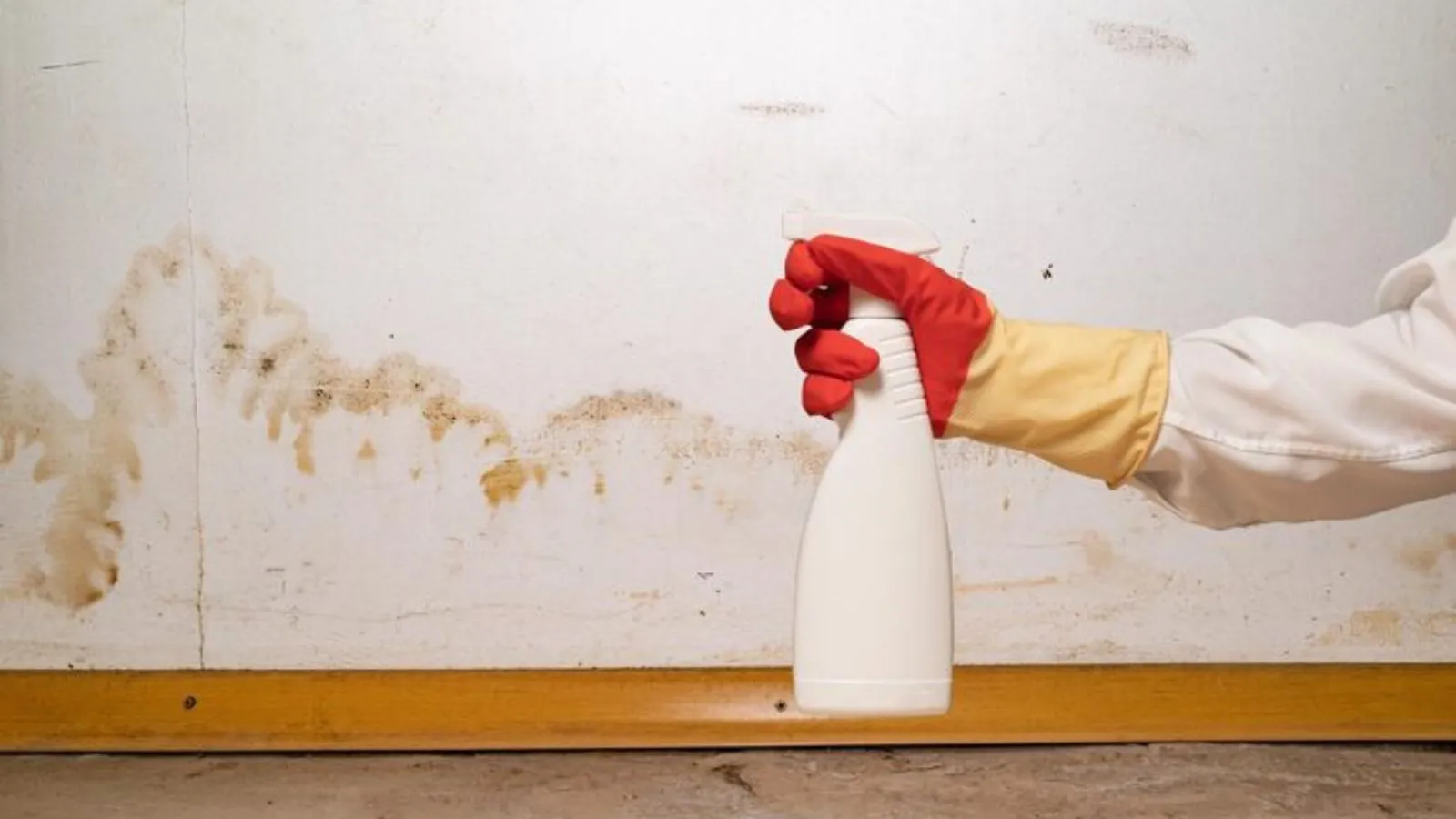
Mold in a basement is common, and most people who find it want to know one thing: can I clean this myself? The honest answer depends on how much there is, what it is growing on and why the space got damp. A small patch on a hard surface is a different job from mold running through drywall and carpet.
This guide explains how to size up the problem, how small areas are usually cleaned and the point where it makes sense to call a professional. It also explains why cleaning without fixing the moisture only buys a few weeks.
Water is spreading right now? Call (833) 521-1033. The line is open 24/7.
Start by measuring the problem
Walk the basement with a flashlight and look at walls, the bottom of the stairs, corners, the backs of stored boxes and the underside of any carpet. Note what the mold is on. Mold on tile, concrete or painted block is easier to clean than mold on drywall, insulation or carpet, which are porous and can hold it below the surface.
The EPA's guide to mold cleanup says that if the affected area is less than about 10 square feet, most people can handle it themselves. That is roughly a three-foot by three-foot patch. Larger areas, repeated growth or mold in the heating and cooling system call for professional help.
Find the moisture before you scrub
Mold needs moisture, so every cleanup that ignores the water source fails. Look for a leak from a pipe, a seep along the wall after rain, a dripping window well, a dryer vent that ends inside the basement or a damp slab. A cheap hygrometer shows humidity, and readings that stay high point to an air problem rather than a leak.
If you find an active leak, stop it first. For a plumbing leak, see our burst pipe water damage page. If water is coming in from the ground, a plumber or foundation contractor is the right call, and cleanup comes after.
How a small patch is cleaned
For a small area on a hard surface, the EPA says to scrub with detergent and water, rinse, and dry the surface completely. Wear an N95 respirator, gloves and eye protection, and keep the area ventilated if you can. Avoid brushing dry mold, since that puts spores in the air.
The EPA does not recommend routine use of bleach or other biocides. Detergent and water remove the mold, and drying is what stops it coming back. Bag any wet rags and cleaning waste before carrying them through the house.
What to throw away
Porous materials that stayed wet and grew mold usually cannot be cleaned and should be removed. That includes wet drywall, ceiling tiles, insulation and carpet padding. Wet carpet that has been damp for more than a day or two is often replaced rather than saved.
Cardboard boxes, paper and fabric stored on a damp floor are also common casualties. Move anything you want to keep to a dry area first, then decide what to discard. Photograph damaged items before you throw them out in case an insurer asks.
When to stop and call a professional
Call a professional when the mold covers more than about 10 square feet, when it keeps returning after cleaning, when drywall or insulation is involved or when the cause is sewage or flood water. Also call if you have questions about your own situation. Ask your doctor about any personal concerns, because we do not make health claims.
Our mold remediation page explains how a crew contains an area, removes affected material and checks that the space is dry. Ask whether your state licenses mold work and request that the scope and price be explained before work starts.
Drying the space and keeping it dry
After cleaning, dry the area completely with fans and a dehumidifier. Structural drying explains how professionals measure moisture and keep equipment running until readings are normal. Many homeowners stop too early, because a surface that feels dry can still hold moisture.
Afterward, keep indoor humidity controlled and fix gutters and grading so water moves away from the foundation. If the basement has a history of dampness, check it after every heavy rain.
A simple checklist before you start
- Find and stop the moisture source first..
- Measure the area and note what it is growing on..
- Wear an N95 respirator, gloves and eye protection..
- Cover nearby items and keep the work area ventilated if possible..
- Scrub hard surfaces with detergent and water, rinse and dry fully..
- Bag and remove porous materials that stayed wet..
- Dry the space with fans and a dehumidifier and check it again in a few days..
Common mistakes in basement mold cleanup
The most common mistake is cleaning before the leak is fixed. The second is painting over mold, which hides it without solving it. A third is using a fogger or spray and leaving the damp material in place.
Another is opening walls without protection. Cutting into moldy drywall releases spores into the house, so wear protection and keep the cut area contained. If this sounds beyond what you want to handle, that is a good reason to call.
What to expect if a crew does it
A crew starts by finding the extent of the moisture and mold. It then isolates the area, removes affected materials, cleans the surfaces and dries the space with equipment. You should receive moisture readings and a clear description of what was done.
We explain scope and price before work starts. If the source is a plumbing or drainage problem, we will tell you that a plumber or contractor is needed too.
A note for basements around Trussville
Trussville sits in Jefferson and St. Clair counties and grew from about 3,500 people in 1980 to 26,123 at the 2020 census. That means basements here range from homes in the 1930s Cahaba Project, built between 1936 and 1938, to houses finished in the last two decades. Older basements often have unfinished block walls, while newer ones are frequently finished with drywall and carpet.
The type of finish changes the cleanup. Painted block can be scrubbed, but finished drywall hides moisture behind it. If you are not sure what is behind a wall, ask a professional to read it with a moisture meter.
Where to go next
Basement leaks after rain are covered on our basement water damage cleanup page. If you are in Clay or Leeds, crews serve both from Trussville.
Mold work is guided by the ANSI/IICRC S520 standard, and moisture has to be fixed first or growth returns. Ask whether your state licenses mold work before you hire.
Questions readers ask
Is a basement in Trussville more likely to grow mold after a storm?
Heavy rain can raise moisture in any basement, so check after storms. If you see a damp wall, a wet floor or a musty smell, find the source before cleaning. Call if the area is large or keeps returning.
Can I paint over mold in my basement?
No. Paint does not stop mold growth and the moisture will bring it back. Clean the area, fix the source and let it dry before any finishing.
How do I know the mold is gone?
The surface is clean and dry, the smell is gone and moisture readings are normal. If it returns, the moisture source has not been solved.