
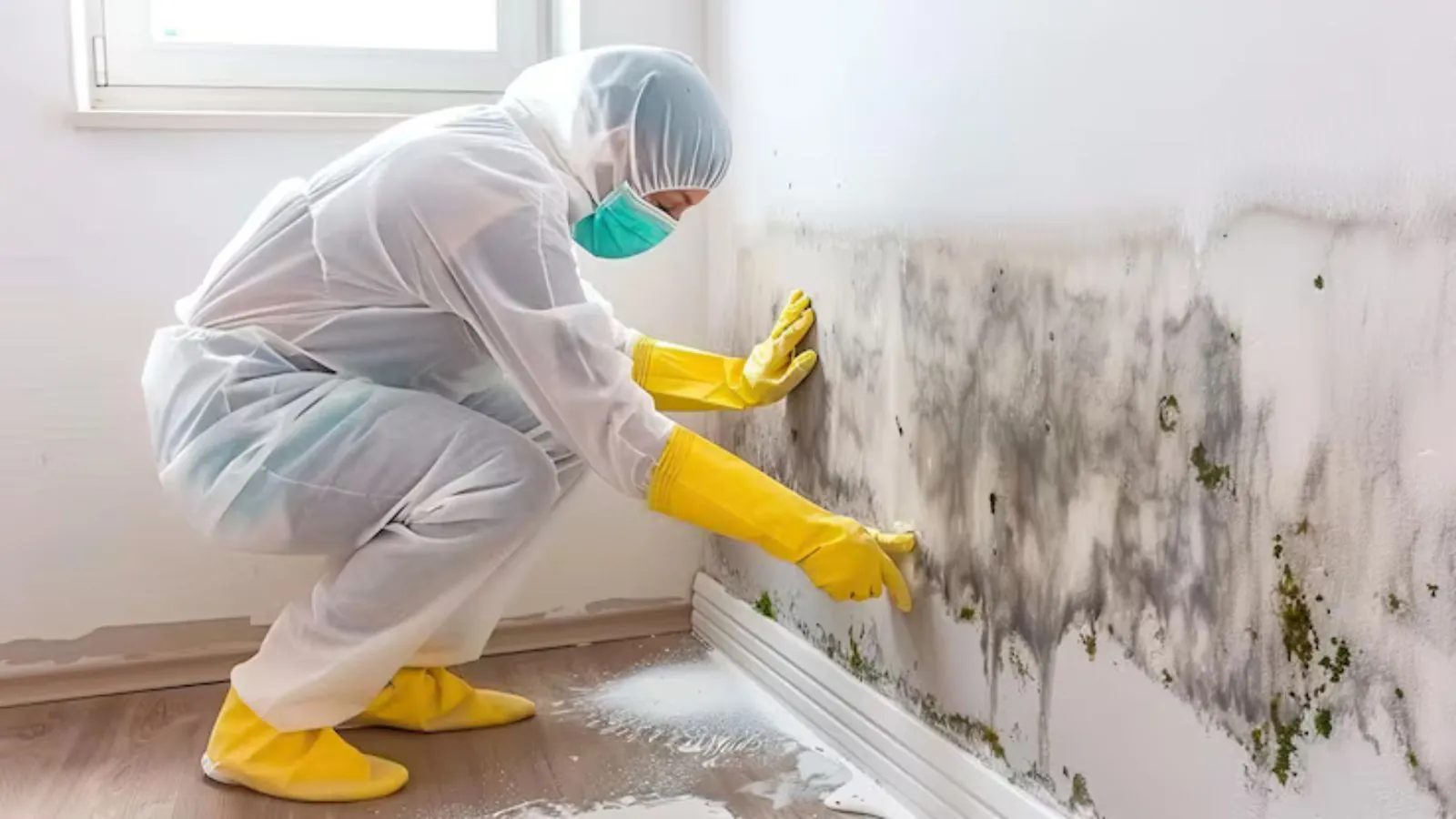
Cleaning basement mold feels like the hard part, but the lasting fix is controlling the moisture that fed it. Homeowners who scrub a wall and repaint often see the same spots return in a month or two. This guide is about the second half of the job, keeping a basement dry enough that mold has little to grow on.
It covers humidity, drainage, ventilation and the checks to run after a heavy rain. It does not replace cleanup, and large or recurring mold should be handled by a professional.
Water is spreading right now? Call (833) 521-1033. The line is open 24/7.
Understand what mold needs
Mold needs moisture and something to grow on, and basements supply both easily. Cool concrete surfaces collect condensation when warm, humid air touches them. Stored cardboard, wood and fabric provide food.
You cannot remove every spore from a house, so the aim is to keep surfaces dry. The EPA says controlling moisture is the key to controlling mold, and that is the idea behind every step below.
Measure humidity
A simple hygrometer costs little and tells you what the air is doing. The EPA suggests keeping indoor humidity below 60 percent, with 30 to 50 percent being a commonly cited comfortable range. Check readings at different times of day and after rain.
If humidity stays high, a dehumidifier sized for the space can help. Empty it regularly or connect it to a drain. Make sure it is not hiding a leak that needs fixing.
Manage water outside the house
Many basement problems start outside. Gutters that overflow, downspouts that end beside the foundation and soil that slopes toward the house all send water to the wall. Extend downspouts away from the house and keep gutters clear.
Check that soil slopes away from the foundation. If water still comes in during storms, a drainage or foundation contractor can look at the cause. Cleanup comes after the water is stopped, as described on our basement water damage cleanup page.
Control moisture sources inside
Dryers, showers and cooking add moisture to the air. Vent the dryer outdoors, use bath fans and keep a washing machine hose in good shape. Check supply lines and the water heater for drips, which can go unnoticed in a corner.
A slow leak is the most common hidden cause. If you see rust, stains or a damp smell near a pipe, call a plumber. See water heater leak cleanup if a tank is the source.
Store things so air can move
Keep stored items off the floor on shelves or plastic bins, and leave space between boxes and walls. Cardboard absorbs moisture and gives mold something to feed on. Plastic bins with lids are a better choice for anything you want to keep.
Avoid covering basement walls with furniture or stacked items. Air movement along the wall helps surfaces dry.
Check after storms and seasonal changes
After heavy rain, walk the basement and look at the floor edge, window wells and walls. Touch the wall in a few spots. If it is cool and damp, find out why. Check again in humid summer weather, when condensation is common.
Catching a damp wall early can mean a clean-and-dry job rather than a rebuild. If you find mold above about 10 square feet or growth in the duct system, call a professional.
When prevention is not enough
If mold keeps coming back, the moisture source has not been solved. A professional can measure moisture in walls and floors and tell you whether a dehumidifier is enough. Our mold remediation page explains how crews deal with growth that has already spread.
Ask for moisture readings before and after work, and keep them. They show that the area reached a normal range.
A seasonal basement routine
- Spring: clear gutters, check grading and look at window wells..
- Summer: watch humidity and condensation on pipes and walls..
- Fall: clear leaves from gutters and downspouts before heavy rain..
- Winter: check for frozen or leaking pipes and keep the dehumidifier clean..
- After every heavy storm: walk the basement and touch the walls..
- Each year: inspect the water heater, washer hoses and sump pump if you have one..
What a sump pump does and does not do
A sump pump removes water that collects in a pit. It does not stop water from reaching the pit and it fails when the power goes out unless it has a battery backup. Test it by pouring water into the pit and watching it run.
If you have a pump, include it in your seasonal routine. A pump that fails during a storm is a common reason a basement floods.
Signs that moisture is winning
A musty smell, peeling paint, white powder on block walls, rust on metal items and damp stored boxes are signs. Condensation on windows or cold pipes is also a clue. These are early warnings, and acting on them takes less work than waiting.
If you see growth, follow the steps in our guide on how to clean mold in a basement, and call a professional if it is large or recurring.
Know when to ask for help
Prevention works well when the cause is simple, such as a clogged gutter or a high humidity reading. It works less well when water is entering through a wall or floor. Those problems need a trade professional.
If you cannot tell which kind of problem you have, call and describe it. We will tell you what we would check and whether the problem sounds like drying, mold, plumbing or drainage.
Humidity and rain in the Trussville area
The Trussville area is humid for much of the year, and the Cahaba River runs through the city. Local drainage matters as much as indoor humidity. We do not say which streets flood, because that depends on your address. Check the FEMA Flood Map Service Center for your parcel and ask the City of Trussville about drainage questions.
In Trussville Springs, which sits beside the Cahaba River, and in other lower areas, outside water management deserves extra attention. Check gutters and grading each fall and spring.
What to do before moisture returns
- Confirm gutters and downspouts carry water well away from the wall..
- Keep stored boxes off the floor and away from exterior walls..
- Watch for a damp smell after heavy rain and look behind stored items..
- Do not scrub or disturb visible growth. Call and describe it first..
Where to go next
Callers in Odenville and Leeds ask about the same problems, and the pages for those towns explain how crews reach each.
Published practice for mold work is ANSI/IICRC S520. It treats moisture control as the first step, which is why this guide starts with water and not with cleaners. For health questions about mold, ask your physician.
Questions readers ask
How often should I check a basement in Trussville for dampness?
Check after heavy rain and at least each spring and fall. Look at the floor edges, walls and stored items.
Is a dehumidifier enough to stop basement mold?
It helps when humidity is the cause. If water is entering through a wall or floor, the source must be fixed first.
What humidity level should I aim for?
The EPA suggests keeping indoor humidity below 60 percent. Many people aim for 30 to 50 percent.